
MRO Aircraft Cleaning & Technical Support
Aircraft inside heavy maintenance environments are stripped down, inspected, repaired, and rebuilt under intense scrutiny.
FoxTrot operates inside that environment.
From corrosion-inhibiting compound removal to pre-inspection surface preparation and detailed interior resets prior to return to service, our teams deliver disciplined execution in regulated, high-risk MRO settings.
We support inspection readiness.
We support maintenance efficiency.
We protect the asset while it is fully exposed.
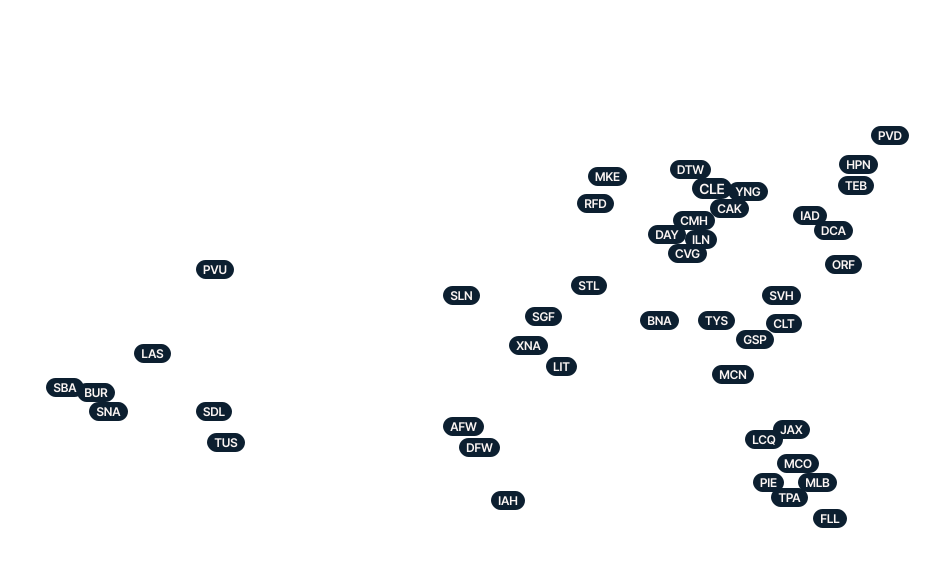
- AFW
- BNA
- CVG
- ILN
- JAX
- LCQ
- MCN
- MKE
- MLB
- PVU
- RFD
- SLN
- TUS
Execution Inside High-Risk Environments
Heavy maintenance is not a showroom environment.
Aircraft are opened. Panels are removed. Interiors are exposed. Systems are accessible. Hazards are everywhere.
In these settings, mistakes are not cosmetic. They are operational.
FoxTrot trains MRO teams to operate with heightened technical awareness, including:
- Corrosion-inhibiting compound (CIC) removal using controlled chemical processes
- Confined-space awareness and respirator use
- Tyvek and PPE protocols in high-heat environments
- Fall protection and lift certification
- Situational awareness in congested hangars filled with maintenance crews and equipment
Built for Inspection Standards
In MRO environments, quality is not subjective. It is verifiable.
Corrosion-Inhibiting Compound Removal
Aircraft entering heavy checks require complete CIC removal before inspection and repair. Our teams execute this process systematically, using approved chemicals, defined tooling methods, and structured labor allocations.
This is not surface-level cleaning. It is preparation for engineering and inspection teams.
Surface Preparation & Pre-Inspection Cleaning
Return-to-Service Detailing
Once maintenance is complete, we perform interior resets and presentation-level preparation prior to return to service.
The aircraft leaves the hangar ready.
Safety Is Operational, Not Marketing
MRO environments are hazard-dense.
Lifts, open panels, solvent use, confined spaces, toolboxes, cords, and moving crews create constant risk exposure.
Our safety discipline protects your aircraft, your team, and ours.
We do not compromise in hangar environments.
Structured Teams for Demanding Work
Dedicated Internal Staffing Support
Our internal staffing team recruits specifically for physically demanding, safety-driven MRO environments. Technicians are screened for stamina, awareness, and long-term fit before deployment.
Stability protects performance.
Structured Pre-hire Walkthroughs To Set Realistic Expectations
Every candidate completes a walkthrough before hire. They see the solvents, the confined spaces, the pace, and the heat.
There are no surprises on day one. That clarity reduces early turnover and protects contract continuity.
Certification-based Technician Advancement
Technicians progress through defined certification tiers before handling complex or high-risk services like CIC removal and confined-area work.
Advancement is earned. Competency is verified.
On-site Leadership Oversight
On-site leadership oversight
30-60-90 Implementation Reviews For New Contracts
30-60-90 implementation reviews for new contracts
Frequently Asked Questions
What makes MRO cleaning different from standard aircraft cleaning?
MRO cleaning occurs while aircraft are disassembled, inspected, and repaired. Surfaces are exposed, systems are accessible, and engineering teams depend on proper preparation.
This work requires technical awareness, chemical control, confined-space discipline, and coordination with maintenance leadership. It is preparation for inspection, not cosmetic reset.
How do you handle corrosion-inhibiting compound removal?
CIC removal is executed using structured processes, defined tooling, and controlled chemical application. Teams are trained to work methodically across aircraft surfaces, including confined and high-heat areas.
Labor allocations are defined in advance to ensure thorough removal without compromising safety or asset protection.
How do you maintain safety in high-risk hangar environments?
We enforce required PPE standards, lift certifications, fall protection protocols, and hazard reporting systems. Teams are trained to recognize congested work zones and coordinate with maintenance personnel before beginning service.
Safety expectations are non-negotiable inside heavy maintenance facilities.
What happens if maintenance schedules change mid-service?
MRO environments are dynamic. Aircraft may be moved, panels may reopen, or timelines may compress.
Our teams are trained to course-correct without losing structure. Defined supervision and communication channels allow us to adapt while maintaining service quality and safety standards.
How do you ensure staffing stability on long-term heavy maintenance contracts?
We conduct structured walkthroughs prior to hire to ensure technicians understand the physical demands of the role. Certification tiers allow advancement and skill recognition.
Leadership oversight and internal staffing support help maintain crew stability throughout extended maintenance cycles.
Why should we trust FoxTrot inside our MRO environment?
Heavy maintenance carries low tolerance for preventable error.
FoxTrot operates with documented processes, disciplined safety standards, and structured oversight. We understand that when an aircraft is inside your facility, it is fully exposed and vulnerable.
We treat it accordingly.